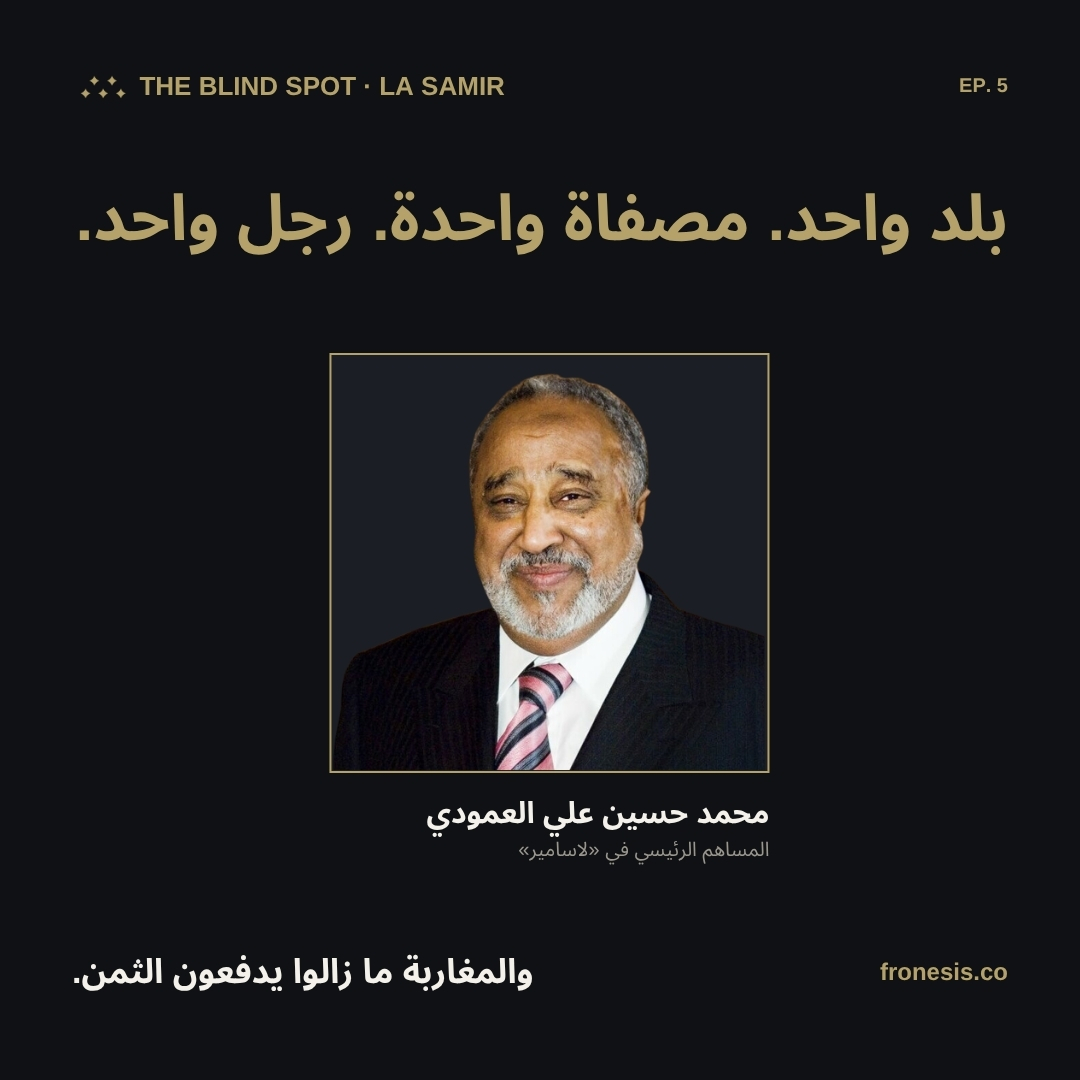
La Samir: one country, one refinery, one man
Every time a Moroccan fills up their tank, they pay for a decision taken nearly thirty years ago. In the 1990s, Morocco privatised La Samir, its only oil refinery, and handed control to a single businessman. Today the refinery is shut, and the country imports all of its fuel. This is not a story about one fraud. It is a story about a question every state, fund and board should ask before handing over a strategic asset: who exactly are we trusting?
The story in brief
The privatisation. In the 1990s, Morocco sold control of La Samir, its only refinery, located in Mohammedia, to Corral Petroleum, the group of billionaire Mohammed Al Amoudi. Corral went on to hold 67% of the company.
The shutdown. In August 2015, at the request of the customs administration, a court ordered the seizure of the refinery’s bank accounts. Production stopped. In 2016, the courts ordered La Samir’s liquidation. Since then, Morocco has imported all of its refined fuel.
The arbitration. In 2018, Corral took Morocco to ICSID, the World Bank’s arbitration centre, claiming up to 2.7 billion dollars. In July 2024, the tribunal awarded it 150 million dollars, less than 6% of its claim. Morocco applied for partial annulment, and in December 2024 enforcement of the award was provisionally suspended.
Meanwhile. Between 2017 and 2019, Al Amoudi was himself detained in Saudi Arabia during the anti-corruption purge led from Riyadh’s Ritz-Carlton. He was released in January 2019, with no charges made public.
A sovereign asset is not entrusted to an individual
Why him? The reasons were most likely political, perhaps diplomatic. But the principle is simple: a sovereign asset is not entrusted to an individual. Full stop.
Before handing over a strategic asset, a state investigates the person: their path, their turning points, their ruptures. Was that done?
To me, as a physiognomist, Al Amoudi is a deeply pragmatic businessman, for whom the end justifies the means, his own end. An excellent profile for making money, for himself. Not for safeguarding the national treasure of a country that is not his own.
Today, it is Moroccan citizens who pay the bill. Every time they fill up.
Before you hand over a strategic asset
The lesson goes beyond Morocco. Whether you are a state, a fund or a board, ask yourself:
- Who exactly are we trusting: a structure, or one person?
- What does this person gain if the asset succeeds, and what do they lose if it fails?
That is what FRONESIS is for: reading people before you commit.
A decision to de-risk before you sign? Contact FRONESIS