
Abraaj: the black sheep of high finance?
The best schools. The right networks. The right seats. And yet, the black sheep?
Abraaj was the largest private equity firm in the Middle East and North Africa, backed by some of the world’s most prestigious investors. When it collapsed, one man was pointed at: its founder.
Here is what is alleged, what has been admitted, and why the person everyone watches is not always the one making the decisions.
The story in brief
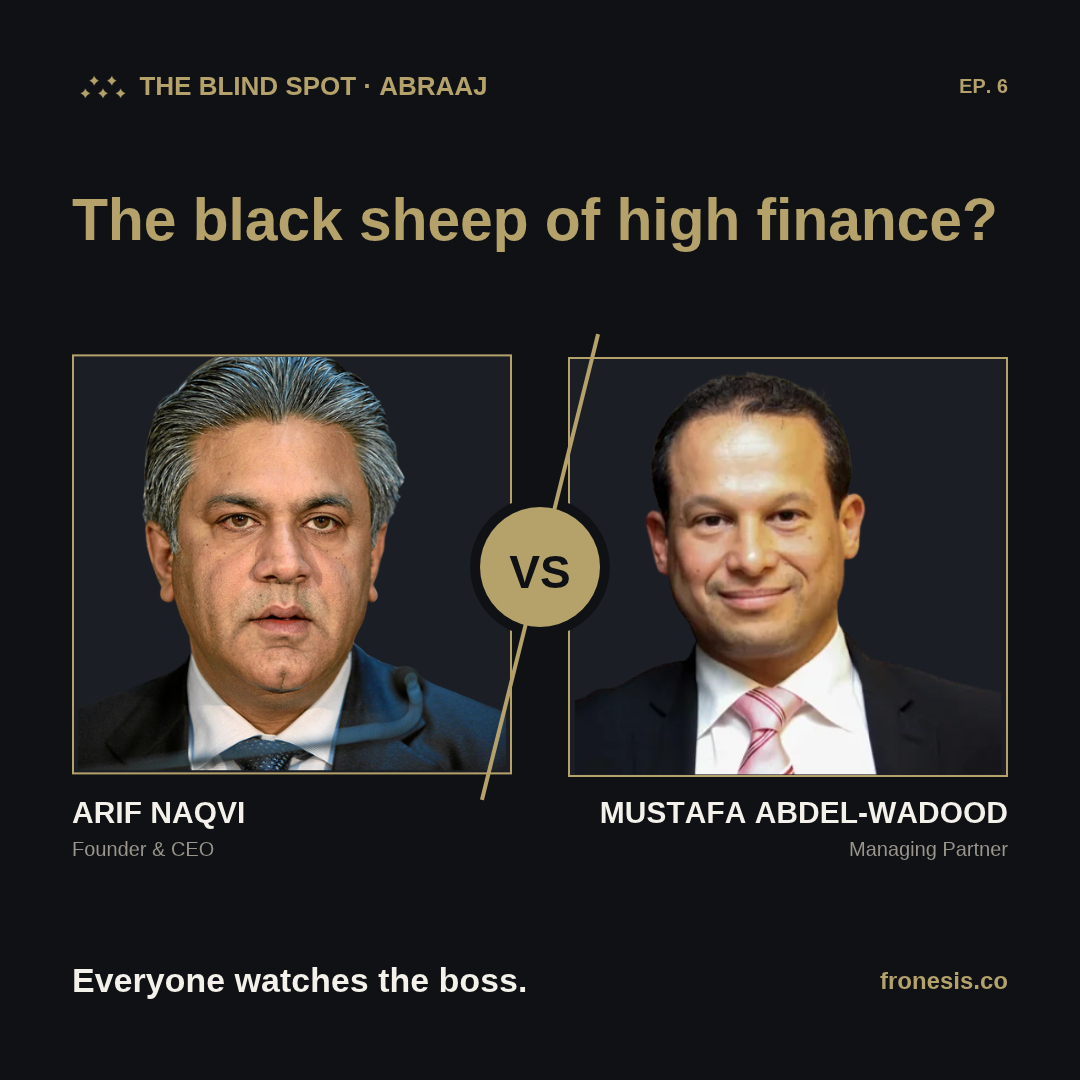
The founder. Arif Naqvi, a London School of Economics graduate who worked at Arthur Andersen and American Express before moving to the Gulf, founded Abraaj Capital in Dubai in 2002. He was honoured in Pakistan and sat alongside leading names in sustainable development.
The investors. Abraaj grew into the largest buyout firm in the Middle East and North Africa. Its investors included the Bill & Melinda Gates Foundation, through a 1-billion-dollar healthcare fund.
The warning signs. In September 2017, an employee at a US foundation questioned the gap between the money called from investors and the money actually invested. The same month, an anonymous email titled “Abraaj Fund 6 Warning” reached several prospective investors. Investors commissioned an audit, the probe widened, and Abraaj collapsed in mid-2018.
The charges. In April 2019, US prosecutors charged Naqvi and managing partner Mustafa Abdel-Wadood. They allege that fund values were inflated by more than 500 million dollars and that at least hundreds of millions of dollars of investor money were misappropriated. According to the indictment, Naqvi wrote to a colleague about one transaction: “it’s a bit like playing poker.”
The arrest. Naqvi was arrested at Heathrow in April 2019. When arrested, he wrote down seven phone numbers, one of them belonging to Pakistan’s president. He was released on a record 15-million-pound bail, under house arrest in London. He denies all charges.
The plea. In June 2019, Abdel-Wadood pleaded guilty and agreed to cooperate with US prosecutors. According to his statement, Naqvi directed the deception. His sentencing was postponed pending Naqvi’s extradition.
Where things stand. In 2023, Naqvi lost his final appeal against extradition to the United States. According to a September 2026 report, he remains under house arrest in London. He has never been tried.
Who was leading?
The courts will decide on guilt. What follows is my reading as a physiognomist.
Arif Naqvi. He wants to shine. The maximum for the minimum. A desire so strong that it overrides caution.
Mustafa Abdel-Wadood. A man of the shadows. Very powerful. Someone who makes the decisions, away from the light.
So I ask the question. Can a fraud this size really be decided by one man? And does the first one to talk tell the whole truth, or only his own?
Naqvi is probably not innocent. But he makes a very convenient black sheep. As with Wirecard, everyone watches the boss. Few watch those who stay in the shadows.
The red flags
- Money called but not invested. The first question came from an investor simply comparing two numbers.
- An anonymous warning. Someone knew enough to write to investors, months before the collapse.
- Prestige as a shield. Top-tier investors reassured other investors, and the founder’s reputation reassured them all.
- A partner who knew. According to the indictment, when an executive called the situation fraud in December 2017, Abdel-Wadood replied: “Even beyond that.”
The signals were there. The question is who was looking, and at whom.
Before you partner
Abraaj is not only the story of a founder. It is the story of the person next to him.
Before you sign, ask yourself:
- The rules I am accepting: who wrote them?
- In this partnership, who really decides?
That is what FRONESIS is for: reading people before you commit.
A decision to de-risk before you sign? Contact FRONESIS
Sources
- Gulf Business / Reuters, the arrests and charges
- The National, the indictment
- Gulf News, the anonymous email
- Gulf News, Abdel-Wadood’s guilty plea
- The National, sentencing postponed
- Bloomberg, the seven phone numbers
- Geo News, the 15-million-pound bail
- Dawn, final extradition appeal lost
- R.A. Scott, September 2026
- Wikipedia, Arif Naqvi